11. MVP.com

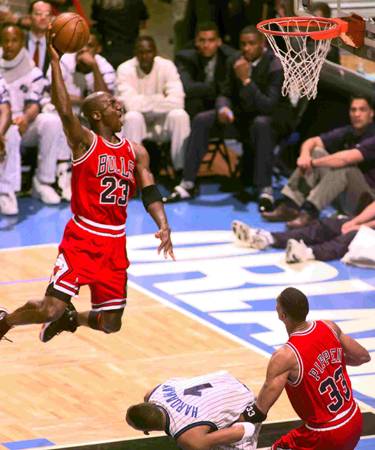
MVP.com was a website devoted to selling sporting goods on the strength of endorsements from legends like Michael Jordan and Wayne Gretzky. The company’s prospects seemed bright at the onset, backed by $65 million in venture funding and an equity sharing partnership with CBS Sports that promised MVP free advertising during games. The $85 million deal was ill-fated, however, as MVP reneged on its promise to pay CBS the promised $10 million per year. Soon after, CBS squashed the agreement and MVP.com was benched for good. The lesson to entrepreneurs everywhere: celebrity endorsements mean nothing without a product or service people really, truly want. Today, Sports Business Journal refers to MVP as “a sobering lesson from the dot com bust, showing the need for business fundamentals no matter the names behind the venture.”
12. GlobalTek Solutions

Fronted by baby-faced, 18 year old Shazad Mohamed, GlobalTek Solutions was hailed by the popular press as the next big thing in the web design market. The young entrepreneur was featured in TV interviews and business magazines around the nation, and his company seemed destined for big success. Unfortunately, the story hasn’t panned out so well. GlobalTek’s website has remained in the same frozen state for almost five years, still claiming to offer solutions that “make the paperless practice a reality” in health care. Despite the mass amounts of hype and press coverage, it appears that GlobalTek never really came into its own as an Internet business.
13. Monitor110

Monitor110 began with a decent enough idea: pull together the newest, most relevant information online to help institutional investors stay ahead of the curve. Unfortunately, the company now serves as a cautionary tale of what not to do instead of a positive example, having burned through the $20 million it raised over three rounds of funding. One of the founders offered his reasons for why the company failed in a published postmortem. They are eerily consistent with many of the reasons for why the other companies on this list wound up failures.
- The lack of a single, “the buck stops here” leader until too late in the game
- No separation between the technology organization and the product organization
- Too much PR, too early
- Too much money
- Not close enough to the customer
- Slow to adapt to market reality
- Disagreement on strategy both within the Company and with the Board
14. Thought, Inc.

Thought was written up in a Forbes piece entitled “When Startups Become Blowups.” Apparently, they were a maker of customized server software that sounded a lot better in theory than it proved to be in practice. Unfortunately, their tale is symptomatic of many Internet startups that aren’t founded around a viable business strategy. The article goes on to tell the story of Hugh Carrol, a man who left a steady job in the Valley for a sales on comission job at Thought. Sadly, the software was difficult to sell and the company’s cash flow problems caused them to skip Carrol’s paychecks. When she investigated, she was told that she would get a lump sum “when revenues started coming in.” Predictably, that revenue never did come in – and neither did Carrol’s pay.
“It was a very disillusioning experience that left me cynical”, is all Carrol had to say about the Thought, Inc. fiasco.
15. Channel A

The same Forbes piece recounts the tale of Channel A, a website dedicated to Asian-American issues and entertainment. The new venture was appealing enough to lure 27 year old Pamela Yoon away from a secure job and get down in the trenches working for them, instead. “Why not take a chance?”, she offered as her reason. She soon had an all-too-painful answer. Despite Asian investors sinking millions into the Channel A site (and its many favorable mentions in the San Francisco newspapers), their target market in Asia ceased to care about what the site had to offer them. Consequently, the plug was pulled in Channel A in 1997, not even a year after Yoon came aboard.
“It sucked afterword”, Yoon said, adding that she was also unemployed for two and a half months after Channel A closed its doors.


This is a great list! It is a blueprint of what not to do in growing your online business! Should be a class at Wharton!
Note to the author: an opening parenthesis, (, eventually requires a closing parenthesis, ).
FWIW I wasn’t a founder on Kiko. I was their first employee (#3).
I remember Beenz, it was almost a good idea… for a 5 yearold!
This would probably take too much time, but what would really be great if you could find/compile a list of the founders of these companies, and what they’re doing now. We all know that most entrepreneurs fail the first time out of the gate, but many go on to do great things. How does “epic” vs. “quiet” failure affect future success?
Startup.com is an entertaining documentary. It’s actually on satellite again tomorrow morning. I’ve got my DVR set.
Also:
The main problem with Pets.com was the shipping costs for selling heavy, and relatively inexpensive, bags of dog food and cat litter. An online retailer needs a much lower ratio of shipping costs to product value to be profitable.
No Value America? The subject of Dot.bomb, Value America was a spectacular blow-up. The kicker is that Amazon now does what they set out to do: sell anything and everything.
as I understand it, friendster is quite popular in China…
There was a documentary about kozmo.com too: e-dreams
http://www.imdb.com/title/tt0262021/
Would you take the risk to work for a startup now? I don’t think I would…
Wow dude, I forgot about most of those sites. Good article!
JT
http://www.FireMe.To/udi
another famous flop from 97-98 : iFusion.com
I was a fan of both WebVan and Kozmo. Both delivered excellent product and great service. They were especially helpful because I was living in downtown Atlanta, which has very few stores open at night and no local grocery store, or didn’t at that time. It was fantastic! But I guess both were too good to be true.
Interesting post, but over 15 of those stories all occurred between 1998 and 2001. Of course there were a lot of flops during that time, I’d like to hear more start-up failures after 2001…follow up post?
What did Kibu (#9) do or sell? The article mentions that they began “to attract users from its target market” but never says who that is???
It’s probably misleading to say Go.com “acquired” content from ESPN and ABC, since those are both Disney-owned properties.
What did Kibu do? And you should probably note that while Go.com partnered with ABC and ESPN, both of those companies are Disney brands as well.
Great list! Now we need a list of dot.com companies that made it and what they felt was why they were successful.
I think know what to do is just as important on knowing what not to do.
Startup.com was a great film. Too bad Govworks didn’t succeed. The idea is now in use all over the place.
No loser list should be without the miserable failure of …. smallbusiness.com
I think Friendster is still STRONG in numbers. Have you guys visited the site recently? To be honest its more user friendly than FACEBOOK or MYSPACE.
You shouldn’t include friendster.com as one of the bombed sites. I still use it, they have APIs, WEB 2.0 and they are OPENSOCIAL.
Being a SELLOUT doesn’t mean you bombed!!!
Just proves you can have a great idea, great intentions, etc … but you still need the right minds to push it forward. Great article.
Some people are just way into the future and it’s not their time to shine. We’re seeing another wave this time around too, even though only smaller players.
Funny selection!
A friend of mine use to work for friendster.
What a pile of poo that company was.
I can’t believe they didn’t sell when they could.
I don’t know why kazaa was on this list..
they didn’t fail because they were bad they failed
because they were destroyed by the music industry.
People liked kazaa, they didn’t like the free spyware tho.
Also this list is real short.. there were no just 25 company’s who failed during the dot.com time frame there were 100’s that you may have or not have heard of.
excite, inktomi, ariba, netscape the list go’s on and on.
Befor you say that netscape is not out of business, I’ll
clarify. After netscapes business started going down the tubes, the company was split up and sold off to sun and aol.
100% of all of the employees quit withing the next 10 months if they were not let go when there managers quit.
All that remains of “netscape” is it’s name.
Wow, I remember when eToys was rocking on the stock market. Too bad they never survived the bubble burst… here’s a story of how they could of potentially changed their strategy and business tactics to surive (look at the excerpts)… http://www.readtheanswer.com/index.php?RTA=web2
don’t forget PODSHOW
Great read…enjoyed it. It seems as though PlanetRX is still up and running though. I even decided to call them directly and place an order and was able to do so.
This is a great collection. I have started my internet business few months and this article is a great input to my business decision.
Great Job. Keep it up.
-Thanga
eve.com – I had quite a few friends involved with them. They gave a great severence package, though!
Kick ass list and a great example indeed. I forgot about eToys. Loved their jingle. I can’t believe Beenz raised 80MM dollars. WOW.
Garden.com
I knew I had wasted my money when the strategy was “kiosks in gardening centers” promptly followed with a 10 minute description of why it was a brilliant idea. Only minimal change in consumer mindset and spending patterns will make a ton of money.
Great list, I was a pretty prominent user on a number of those sites (particularly Altavista).
living.com
$70 million burned in 12 months, and they took a family-owned furniture business with it.
Context Magazine: http://tinyurl.com/5g7gff
SF Chronicle: http://tinyurl.com/5akd6k
You would think the time is ripe for a WebVan service, with the gas prices so high right now.
Safeway has been trying to deliver your groceries for a couple of years.
Has anyone ever had their groceries delivered?
Take care,
Michael
I was bitten for almost $5g working for SoulMD.com. They went under and refused to pay for some work I did. Talking to the CEO on the phone, his answer was- quote- “Hey, you got screwed! Get over it!” My lawyer sent him a letter and it was returned unopened, and the little shit had carefully colored a box over the entire address with a ball point pen.
Monte, we have unfinished business if I ever see you on the street.
what? no garden.com ? sheez!
Sadly, my stock broker, the person who was giving me investment advice, sank all his money into eToys when it was at its peak price. I derive a little satisfaction from imagining that he’s living in a smaller refrigerator box than me.
SAD!!! they must have put in so much of hard work…
What about “powwow”? the downloaded program to “chat”…man that was awesome back then! *LOL*
There’s a lot of things to be learned from failure. Thanks for the reminder of some of the more fantastic failures out there.
This is great list and i think it shame such great ideas might fail , more research should have been done though i guess
This is a very good site, it will help me to know what not to do in starting my own business. Thanks for the info.
very informative…thanks for the post.
Wow…
I guess they did bomb… because I haven’t heard of any of them!
i still use and love friendster!
I worked for an online publisher during the 15 minutes that Beenz was alive.
Beenz were desperate for us to jump on board. I remember one of their reps trying to convince me that eventually, currencies would be replaced by ‘Beenz’. I laughed so hard I almost wet myself.
As laughable as their distorted ‘vision’ was, they somehow managed to convince some moron in our marketing dept that it was viable. We rolled it out across several million pages, only to roll back 4 weeks later when Beenz announced they’d pulled the pin.
Beenz was yet another hair-brain idea sold by enthusiastic 20 somethings to greedy investors and marketing managers so wet behind the ears and desperate to make a buck, they couldn’t spot a stupid idea if it smacked them in the face!
But having said that, if someone told me back in 2000, a site like Facebook would be worth billions, I’d have told them to get off the crack-pipe.
Maybe they are the visionaries – maybe they know the odds are slim, but, if it works, then the sky is the limit. I guess it’s easy to take a chance when you’re using someone else’s money.
So, with all of these out of the way, where might someone get advice on starting yet another one? Maybe one with a useful purpose, cash flow, wide market, ect., ect.. I have an idea that I want to get off the ground, but don’t know where to go to get good advice before the “beenz” are spilled.
I wish there were 100 failures on this list. That was a great read.
great read
I’d have added DEN to this, for sure…
Same comment with Todd. I don’t recall seeing what Kibu was about in the article. Also, IMHO, some of the companies don’t deserve to be in the “failed miserably” list. Other than that, it was a good read.
Interesting Read, jogging my memory to many, thinking “failed miserably” is in the amount of revenue lost. Ordering kitty litter, waiting for 2-3 days stinks to high heavens.
OMG, Owners of company must not have ever owned a stinking Cat.
The old ones like boo and webvan are wellknown but what about some more recent epic startup fails? It’s a dilemma that we won’t hear about any big fails unless the big next bubble explodes. Until that happens, the small fails won’t seem big and relevant enough to talk about.
As Nassim Taleb puts it right in his book “The Black Swan”, people tend to look on the big and colorful successes (twitter, Facebook) but are ignorant when it comes to all the small failures that happen silently and alone.