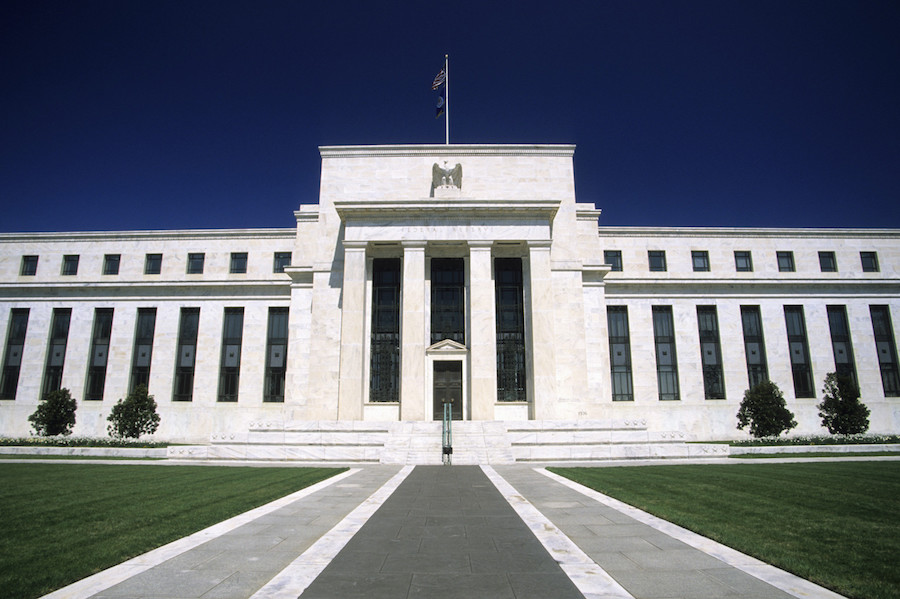
Kevin Warsh has run the Federal Reserve for about a month, and he has already done something his predecessors spent two decades trying to avoid. He made the central bank harder to read.
At his first policy meeting as Fed chair, which ended June 17, Warsh and his colleagues left the benchmark interest rate where it was, in a range of 3.5% to 3.75%, on a unanimous 12-0 vote, Fox Business reported. On its own, that is a non-event. Wall Street expected the hold and got it.
The news was in everything around the decision.
The Fed’s post-meeting statement, the document markets pick apart word by word, was cut to 132 words from 341 in April, the Associated Press reported. Warsh said the shorter version left out any hint about where rates go next — the practice known as forward guidance — and that the omission was on purpose. He called the statement “curt,” and he meant it as praise.
Investors did not take it that way. Two-year Treasury yields, which track expectations for Fed policy, rose to 4.21%, their highest in more than a year, CNN reported, and stocks sold off. The read was simple. A Fed that won’t tell you what it’s thinking, talking tougher on inflation, looks like a Fed getting ready to raise rates.
Its own forecasts pointed the same way. According to the quarterly projections released that day, nine of the Fed’s 18 policymakers signaled they wanted higher rates this year, six of them backing two quarter-point increases. In March, not one official had penciled in a hike. That is a fast turn, and it tracks the data: inflation hit 4.2% in May, the hottest in three years, Chase reported, pushed up by energy prices after the Iran war.
Warsh told reporters the committee would “deliver price stability.” He declined to submit his own rate forecast to the dot plot, leaving one dot conspicuously blank, and he would not say whether price stability meant a hike.
Now the part that matters more than the rate hold.
Since the financial crisis, the Fed has steered markets with its words as much as its rate. By signaling the next move, policymakers could pull down long-term borrowing costs — mortgages, car loans, corporate debt — before they ever touched the funds rate. Warsh thinks that made markets too dependent on the Fed. He wants investors reading the economic data and reaching their own conclusions, the way they did before the crisis turned the Fed into a nonstop broadcaster.
The risk, analysts told the Associated Press, is bigger swings in stocks and bonds, and eventually higher rates for ordinary borrowers. “Forward guidance in general has served to suppress volatility and anchor market expectations,” George Pearkes of Bespoke Investment Group told the AP. Take the guidance away and some of that calm may go with it. Matthew Luzzetti, chief U.S. economist at Deutsche Bank, put it more bluntly to the AP: since the financial crisis the Fed had run a one-way train toward more talk and more transparency, and Warsh has thrown it in reverse.
His model is not subtle. Warsh has pointed again and again to Alan Greenspan, the chair from 1987 to 2005, who kept markets guessing and never once explained a rate decision to reporters on the record, the AP reported. The irony is that Greenspan created the post-meeting statement Warsh just gutted. The first one, in February 1994, announced a surprise rate hike and knocked the Dow down 2.4% in a single day, the AP noted.
The man Warsh replaced is still in the building. Jerome Powell, pushed out as chair after President Trump repeatedly attacked him for not cutting rates, kept his seat on the Board of Governors and, PBS reported, voted June 17 to hold. So the Fed now has a chair who wants to say less, sitting a few feet from a former chair who built his career on saying more.
Warsh is betting that markets have grown too dependent on being told what to do. He may be right. But the first verdict from traders was a selloff, and the first verdict from his own committee was that rates are more likely to go up than down. For a chair who came in promising less noise, that is a loud opening week.