A week before he sat down with Axios on Friday, the U.S. government was treating one of America’s leading AI companies the way it treats a hostile foreign power. By the time that interview ran, the president was saying the whole thing was basically fine. If you want to understand how artificial intelligence is going to be governed in this country, sit with that for a second.
Here’s what happened.
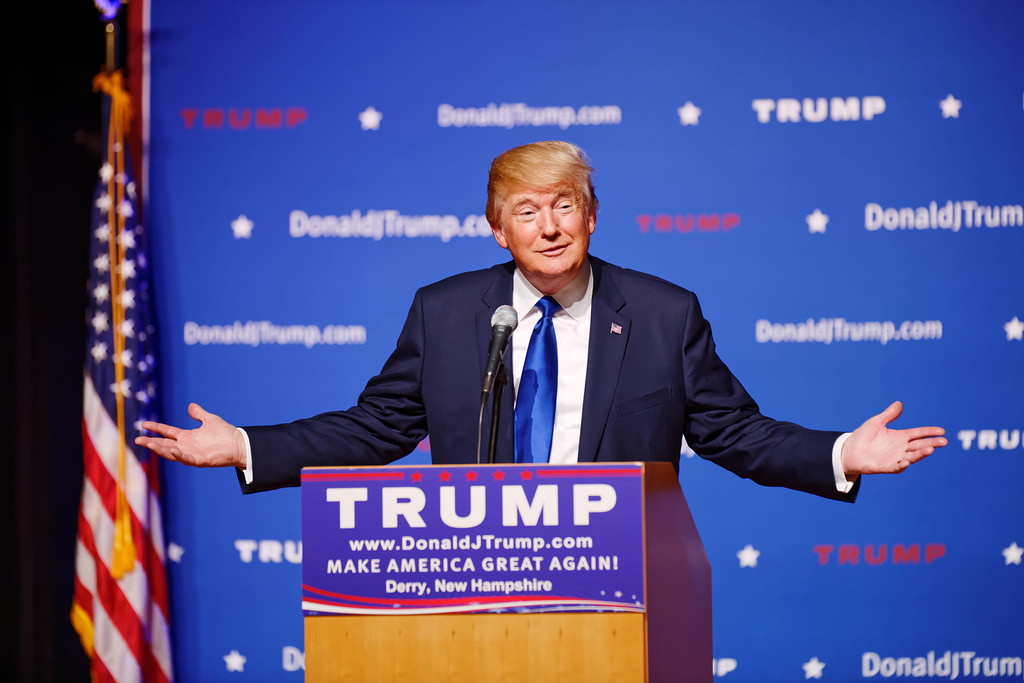
On Friday, in an interview for “The Axios Show,” Marc Caputo asked President Trump whether he viewed Anthropic, or its CEO Dario Amodei, as a threat to national security. “Well, not now, but a week ago, maybe,” Trump said, according to Axios. He added that he walked away from the G7 summit in Évian-les-Bains, France, thinking Amodei was “nice” and “smart,” and that the CEO had responded to the administration’s export-control order “very quickly” and “responsibly.”
Now rewind seven days. Anthropic said in a June 12 statement that the Commerce Department had sent it a directive, which landed at 5:21 p.m. Eastern, barring any foreign national, inside or outside the United States, including Anthropic’s own non-citizen employees, from using its two most powerful models, Fable 5 and Mythos 5. A U.S. official confirmed the letter to Bloomberg. Anthropic said it had no way to screen users by nationality in real time, so it pulled both models for everybody. The company called it a likely misunderstanding and said it was working to restore access. Its other models, including Opus 4.8, stayed up.
So in the span of a week, a frontier AI lab went from “shut your best products off, you’re a security risk” to “nice guy, handled it responsibly.” What changed? As far as the public reporting shows, two things: some technical meetings in Washington, and a lunch in France.
That’s the part worth dwelling on.
The trigger is not really in dispute. According to Axios, it was a vulnerability report. Trump said “a competitor and a part owner” turned Anthropic in, a description that points to Amazon, which has both invested in the company and competes with it. The government’s concern was a method for “jailbreaking” Fable 5’s safeguards to unlock the cyber capabilities of the underlying Mythos model. Anthropic says the jailbreak it was shown is narrow rather than universal, and that publicly available models like OpenAI’s GPT-5.5 can do the same things. The two sides are now reportedly working on shared standards for evaluating AI jailbreaks, which is the useful adult outcome here.
But look at what actually governed the swing. Not a statute. Not a written, transparent finding. A relationship. Trump’s read on Amodei went from threat to “smart” because the two men ended up in a room together and the CEO was responsive. Anthropic’s own statement leans into exactly that register. The company told Axios it was “grateful to the administration for their ongoing partnership in working to get this matter resolved.” Grateful. For having its products switched off by federal order.
This is the working governance model for frontier AI right now, and it should make the companies and the markets nervous. The most consequential technology of the decade is being regulated by proximity to the president. Get a good meeting, and your “tremendous liability” becomes a misunderstanding. Miss your moment, and your flagship goes dark on a Friday afternoon, on the strength of a single emailed letter.
And the gun is still on the table. Trump did not rule out using the Defense Production Act if Anthropic gets out of line. “I have the power to use a lot of things,” he told Axios. “But I’m not sure I have to do that.” Fable 5 and Mythos 5 are still disabled as of this writing. The Pentagon’s separate move to brand Anthropic a supply-chain risk, a label normally reserved for foreign adversaries, is still being fought in court. Axios concluded that the relationship is on the mend. On the mend is not the same as healed.
There is a reason Trump does not want to actually pull the trigger, and he said it plainly: China. He does not want to kneecap an American lab while the U.S. is, in his telling, “beating China by a lot.” That instinct is the only real guardrail in this story, and it is a commercial one, not a legal one. The race is what is protecting Anthropic, not any principle about due process.
So here is where I land. The warm words out of France are good news for Anthropic’s investors, who watched the company file confidentially for an IPO this month and then, days later, watched the government black out its best models. A thaw is a thaw. But if your business, or your safety, or your shot at beating China depends on whether the president enjoyed his lunch, you do not have a policy. You have a mood. And moods change in about a week.